What happens when a local IT service provider and a global Internet exchange operator join forces? A cloud exchange is created that accelerates data streams, transforms business models, and makes small and medium-sized businesses future-proof. About a strategic partnership and the technology behind shared success – an interview with Jens Ahlbrand, Markus Dietz and Ramon Gonzalez.
From colocation to the cloud: How GRASS-MERKUR and DE-CIX are connecting small and medium-sized businesses
Our Interview partners
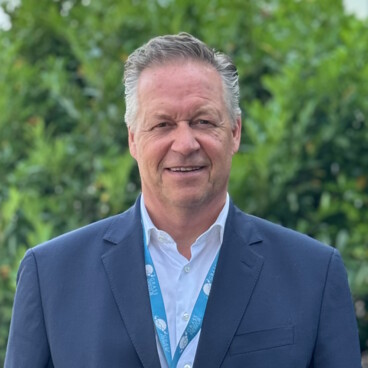
Jens Ahlbrand, Managing Director
GRASS-MERKUR
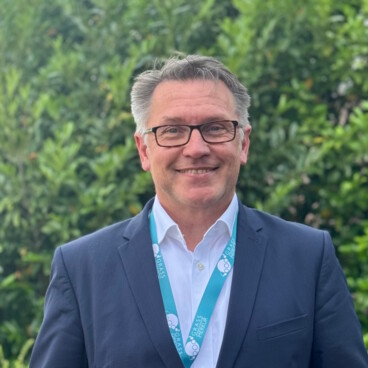
Markus Dietz, Head of Business Development, Sales & Marketing
GRASS-MERKUR

Ramon Gonzalez, Alliance Manager Enterprise Business
DE-CIX
Mr. Ahlbrand, how did the partnership with DE-CIX come about?
Jens Ahlbrand: It arose from our desire for strategic development. Because IT is transforming business models. Starting out as a colocation provider, GRASS-MERKUR now also focuses on cloud, managed, and network services.
Mr. Dietz, what does the collaboration offer you?
Markus Dietz: Hybrid IT landscapes are increasingly in demand these days. As a premium partner of DE-CIX, we are expanding and specializing our portfolio. At the same time, our customers benefit from attractive terms. Fair margins make the collaboration sustainable and attractive for all sides. This allows us to successfully compete with other large providers and their standard solutions.
Mr. Gonzalez, what makes GRASS-MERKUR interesting for DE-CIX?
Ramon Gonzalez: From the outset, GRASS-MERKUR was not concerned with traditional peering, but rather with the revenue models of tomorrow. This is precisely the spirit behind HAN-CIX – powered by DE-CIX, a cloud exchange that we have been operating in the GRASS-MERKUR data center since April 2024.
How important is the project?
Ahlbrand: The cloud exchange is one of our top services. In our data center, clients exchange their data locally, directly, and privately between different clouds. All of this takes place not just anywhere, but in a controlled, transparent, and secure manner here on site in Hanover.
Dietz: We connect companies to the platform with dedicated lines, which in turn is directly and dedicatedly connected to the interconnection ecosystem at DE-CIX Frankfurt. The result: minimized and predictable latency times of around 3 to 4 milliseconds from HAN-CIX in Hanover to DE-CIX in Frankfurt.
Gonzalez: After all, latency is what determines the success of digital, data-based, and intelligent business models today. Every new Internet and cloud exchange helps to further shorten the distance that data has to travel. High-quality, highly available, and low-latency connectivity has long been a competitive location factor.

Which industries and customers does GRASS-MERKUR serve?
Ahlbrand: From insurance to industry and trade to automotive manufacturing, the public sector, local public transport, and healthcare—our roots are in Hanover, and many of our customers come from the region. Although proximity and consulting expertise are crucial in sensitive industries, we now operate throughout Germany.
Dietz: Whether it's compliance, governance, or data security issues, we operate data center infrastructures, IT systems, and applications that meet the highest standards for our clients. And that's exactly where our joint solutions with DE-CIX come in.
What makes the partnership special?
Gonzalez: GRASS-MERKUR is a long-standing, trusted partner for local companies. This gives us insights into IT operations in medium-sized businesses. When we know what companies at the heart of the German economy really need, we can develop our partnership, our offering, and ourselves accordingly.
Ahlbrand: From private network interconnects to direct cloud connections to colocation services—in our day-to-day business, we need to know exactly how to tailor solutions to the technical requirements of our customers.
Dietz: This requires a high level of consulting expertise, in-depth knowledge, and communication skills. This is how powerful interconnection services become practical use cases that reliably meet customer requirements—with guaranteed SLAs.
How can the services be integrated into your own offering?
Gonzalez: Hybrid operating models are the new standard. Typically, companies use resources from GRASS-MERKUR, other cloud providers, and hyperscalers.
Dietz: From encryption to dedicated connectivity, our platform brings these worlds together in a modular way. We work closely with technical experts to jointly meet all of our clients' requirements with precision.
Ahlbrand: This makes planning in advance challenging, but it ensures optimal integration, because our customers appreciate and demand such tailor-made solutions. This fact underscores the quality of our collaboration.
What are GRASS-MERKUR and DE-CIX planning for the future?
Ahlbrand: We will continue to synchronize our sales activities and jointly organize events where we discuss topics that interest our customers: How can I make operating models and IT resources more resilient and secure?
Dietz: Regional proximity remains an important factor for us. But together with DE-CIX, we can expand our sales focus nationally and create the basis for national cluster solutions. A dual data center infrastructure is in the planning stage.
Gonzalez: Not only in Hanover, but everywhere in Germany, companies are looking for ways to future-proof themselves and their IT. Whether it's cloud, AI, or connectivity, together we can advise small and medium-sized businesses from within an ecosystem and connect them at DE-CIX.